

Louisville just got 163 tackles of 2025 production back on its defense.
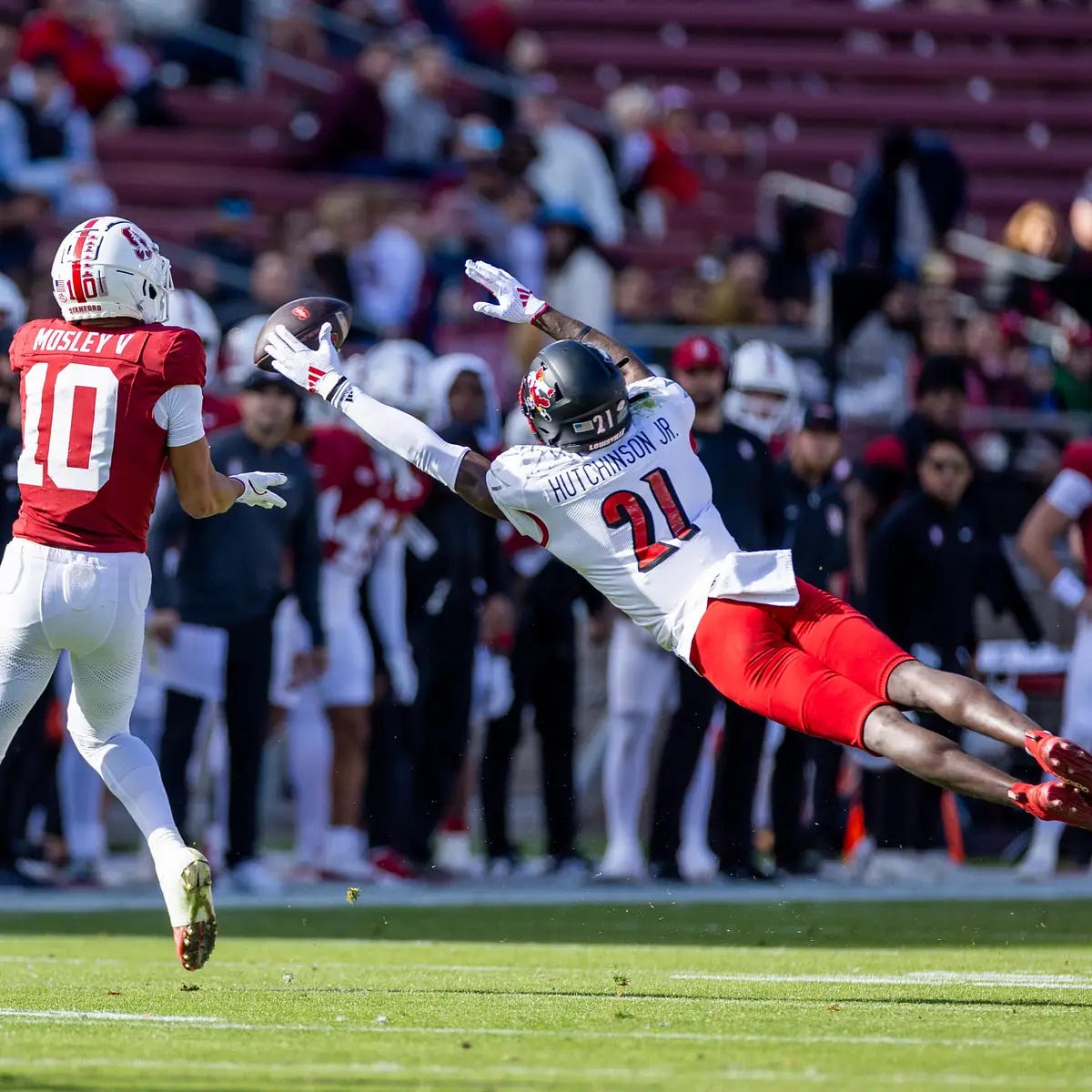
D’Angelo Hutchinson’s announcement Tuesday made it three. The veteran safety will return for the 2026 season alongside linebacker Kalib Perry and cornerback Jabari Mack, all getting another opportunity to play after the recent court ruling involving athletes who began their college careers in 2022. Hutchinson finished last season with 84 tackles, Perry added 55 and Mack had 24.
For Louisville, that is more than a little extra depth arriving before kickoff. It is experienced production that was no longer expected to be part of the 2026 roster.
And very few teams on the Cardinals’ schedule have received anything comparable.
So, what exactly is 5-for-5?
For years, college eligibility meant four seasons of competition inside a five-year clock, but redshirts, medical waivers and a long list of exceptions created plenty of gray area around how much eligibility a player actually had left. The NCAA’s new age-based model is designed to simplify that into a continuous five-year eligibility window, eliminating traditional athletics redshirts and many of those waivers, while a federal injunction has temporarily extended that fifth-season opportunity to qualifying athletes who began college in 2022 and otherwise would have been finished.
That is how Louisville suddenly found several familiar names back in the equation.
Why these returns matter
Hutchinson was one of Louisville’s most dependable defenders last season, finishing second on the team in tackles while providing size and experience at safety.
Perry became an important piece at linebacker, appearing in all 13 games and finishing with 55 tackles. His best performance came against Boston College, when he recorded a career-high 11 tackles and an interception.
Mack played in all 13 games at corner and intercepted two passes, both against College Football Playoff teams: James Madison and Miami.
They are also coming back to a defense that was already one of the better units in the country.
Louisville finished 16th nationally in total defense, surrendering 303.1 yards per game. The Cardinals ranked second in the ACC in total defense and led the conference in passing defense at 188.8 yards allowed per game. Opponents completed just 59.2 percent of their passes.
This is not about trying to repair a struggling defense. Louisville is adding proven production back to a unit that was already a strength.
Jeff Brohm and Louisville’s athletic staff deserve some credit for recognizing the opportunity early.
By Aug. 7, Brohm was publicly acknowledging that Louisville had potential targets and was working through exactly what the ruling would allow. Less than two weeks later, Perry, Mack and Hutchinson are back in the picture.
And there was reason to move quickly.
An athlete must be enrolled in at least 12 credit hours to compete under NCAA rules. Louisville began fall classes Monday, and Friday, Aug. 21 is the university’s final day to register or add classes for the regular semester. That makes this more than a football decision. Anyone coming back has to get admitted, enrolled, academically cleared and worked back into the program before the door effectively closes.
Louisville struck fast!
Now compare that with the schedule
Syracuse has regained wide receiver Justus Ross-Simmons, who caught 20 passes for 312 yards and five touchdowns last season and returned to practice Tuesday after being cleared for a fifth year.
North Carolina brought back kicker Rece Verhoff, its leading scorer last season, for another year.
Kentucky has a potentially significant addition still hanging in the balance. Linebacker Alex Afari Jr. has rejoined the Wildcats and is practicing after totaling 123 tackles and 18 tackles for loss over the past two seasons, but his eligibility to compete remains under review.
Florida State explored possibilities after the ruling, including former quarterback Thomas Castellanos, but no return has been announced.
As of Tuesday night, that is it among Louisville’s 2026 opponents. No other team on the Cardinals’ schedule has publicly announced a football addition through this fifth-year opportunity.
For most of Louisville’s schedule, the roster has stood still.
Louisville is among the national winners, too
There are some significant additions elsewhere.
Defending national champion Indiana brought back defensive linemen Stephen Daley and Kellan Wyatt. Arizona regained leading rusher Ismail Mahdi and linebacker Max Harris. Texas welcomed back veteran offensive lineman Cole Hutson, who has played 48 games with 23 starts.
There is no official 5-for-5 leaderboard, but Louisville’s group clearly belongs among the more notable Power Four beneficiaries so far.
Now comes the balancing act
Getting proven veterans back is a talent win. Fitting them back into a roster that had already begun moving on without them is more complicated.
Louisville built its roster and went through most of the offseason expecting those snaps to belong to someone else. Young players developed. Transfers arrived. Roles began taking shape.
There are still only so many snaps to go around.
Brohm and his staff now have to blend the experience of Hutchinson, Perry and Mack with players who spent months preparing for larger roles. The returners also have to understand that the depth chart did not freeze when they left.
Handled poorly, that can create frustration. Handled with a winning-first mentality, it creates something contenders covet: experienced players competing for snaps instead of a coaching staff searching for someone capable of filling them.
The 5-for-5 ruling created an unexpected opening across college football. Louisville recognized it, moved quickly and strengthened a defense that was already one of the ACC’s best.
It is another example of a program refusing to let an opportunity pass simply because it arrived late.
College football keeps changing. Brohm’s response rarely does: find the advantage and go compete.
GO CARDS!